Photo of William F. Dugan

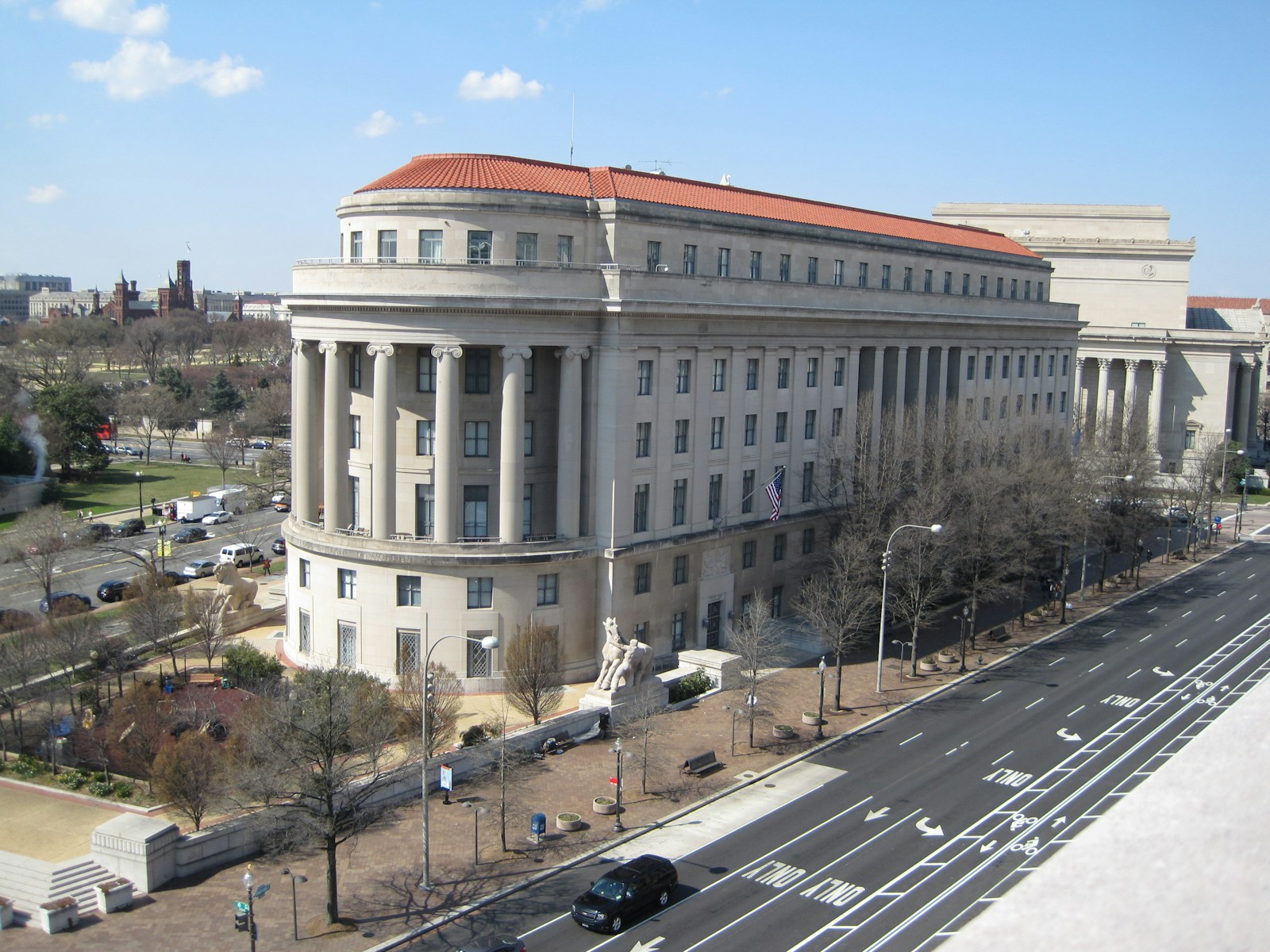
On the eve of the Fourth of July, the FTC rule banning most noncompetes is going up in smoke after a federal court in Texas held the US Chamber of Commerce and a tax firm are likely to prevail on their argument that the agency overstepped its authority to adopt the nationwide prohibition.

The decision, on the heels of the US Supreme Court’s ruling reining in federal agency power under the Chevron doctrine, demonstrates the challenge the FTC faces in promulgating substantive regulations dealing with competition in the economy.Continue Reading Red, White and Blocked: Federal Judge Pauses FTC’s Ban on Employment Noncompetes

Enforcement against restrictive labor market agreements has become a priority for many competition authorities worldwide.

As a result, certain HR practices are in the spotlight of antitrust enforcers and companies and staff who agree not to poach employees from others, or who agree to fix wages, are in clear and present danger of serious financial

The FTC rule banning post-employment noncompetes was published in the Federal Register on May 7, which means the rule will take effect on September 4, 2024, unless pending lawsuits to void the rule are successful.

Despite considerable uncertainty around when, or even whether, the rule will apply, employers should prepare now so as not to be caught flatfooted. The first step is to understand the rule’s parameters and potential impact on your business. Our FAQs guide you through the intricacies of the rule and the steps you should take while waiting for the lawsuits challenging the rule to be resolved.

Application of the Rule to Workers

1. Does the rule apply to B2B noncompetes?

No, the FTC rule does not apply to business-to-business (B2B) noncompetes. Instead, existing federal antitrust laws should continue to be considered when evaluating B2B noncompetes.

2. Does the rule apply to all workers?

No, there are limited exceptions. First, the rule does not invalidate existing noncompete agreements (i.e. agreements entered into on or before the effective date of September 4, 2024) with “senior executives.” After that date, new noncompetes with all US employees will be prohibited.

Senior executive” means a worker who received “total annual compensation” of at least $151,164 in the preceding year (or the equivalent amount when annualized if the worker was employed during only part of the year) and who is in a “policy-making position.”

  • “Total annual compensation” may include salary, commissions, nondiscretionary bonuses, and other nondiscretionary compensation earned during the preceding year, but does not include the cost of, or contributions to, fringe benefit programs.
  • Those in a “policy-making position” may include the President, CEO or equivalent, or others with “policy-making authority,” meaning “final authority to make policy decisions that control significant aspects of a business entity or common enterprise.” In the Supplementary Information to the rule (the FTC’s commentary on the rule), the Commission notes “many executives in what is often called the ‘C-suite’ will likely be senior executives if they are making decisions that have a significant impact on the business, such as important policies that affect most or all of the business. Partners in a business, such as physician partners of an independent physician practice, would also generally qualify as senior executives under the duties prong, assuming the partners have authority to make policy decisions about the business.”

Second, the rule does not apply to workers outside of the United States. See FAQ 11 below.Continue Reading Thirteen Things You Didn’t Know About the FTC’s Noncompete Ban and Five Steps to Prepare Now in Case it Takes Effect

2023 was a landmark year for labor in the US, and 2024 is on track to keep up. Last year, the NLRB’s General Counsel was relentless in overturning precedential decisions and standards impacting both unionized and non-unionized employers. The result was an overall employee-friendly shift to labor laws encouraging both unionization and concerted employee actions

On April 23, the Federal Trade Commission voted 3-2 to issue its final rule on noncompetes, imposing a near-total ban on all employer-employee noncompetes in the US. Barring challenges (the first lawsuits have already been filed), the rule would become effective 120 days from publication.

The rule will be a game-changer for companies operating in the US if it takes effect as issued.

Breaking it Down

What does the rule do?

With only a few exceptions, the FTC’s now-final rule declares employer-employee noncompete clauses an “unfair method of competition,” and a violation of Section 5 of the FTC Act. The rule targets both formal noncompete clauses and “functional noncompete” clauses that have the effect of prohibiting the worker from seeking or accepting employment with a person or operating a business after the conclusion of the worker’s employment with the employer. This can include broad nondisclosure agreements that have the effect of precluding workers from seeking employment opportunities in the same field.Continue Reading Breaking News: The FTC Bans Nearly All Employer-Employee Noncompetes Except Those Given as Part of a ‘Bona Fide’ Sale of Business

You’re not alone in wondering where the Equal Employment Opportunity Commission’s final regulations to implement the Pregnant Workers Fairness Act are. In fact, they are well past their due date.

How it started

The PWFA became effective on June 27, 2023. In August 2023, the EEOC published proposed regulations to implement the PWFA. (We outlined the proposed regulations in our blog here, and about the PWFA here). The public comment period for the proposed regulations closed October 10, 2023, and the proposed regulations were delivered to the Office of Information and Regulatory Affairs (“OIRA”) on December 27, 2023 for review.

How it is going

However, to date, no final regulations have been issued, despite the PWFA’s requirement that the EEOC issue regulations by December 29, 2023. The regulations, once finalized, will provide clarity for employers implementing policies and practices to comply with the PWFA. For instance, the proposed regulations outline a nonexhaustive list of what the EEOC considers potential accommodations under the PWFA, including job restructuring and part-time or modified work schedules.

However, even without final regulations in place, employers are required to meet the PWFA’s mandates. The proposed regulations can still be used to offer insight into how the EEOC believes the PWFA should be interpreted.Continue Reading Pregnant Pause: The EEOC’s Delay In Issuing Final Regs For The PWFA Should Not Delay Compliance

Baker McKenzie’s North America Trade Secrets Practice is a true cross-disciplinary team of industry ranked and recognized intellectual property, employment, tech transaction, litigation and trial attorneys exclusively dedicated to helping clients identify, protect, prosecute and defend their most valuable, complex and market-differentiating trade secrets throughout the US, Canada, Mexico and globally.

Our Focus on Trade

Combining the views of 600 senior in-house lawyers at multinational companies across four continents with the insights of Baker McKenzie experts in tax, employment and antitrust, the 7th Edition of our Global Disputes Forecast helps in-house counsel see around corners as they prepare for 2024. The forecast includes detailed predictions for disputes involving ESG, cybersecurity

Illinois employers navigated an avalanche of new laws in 2023, with more on the horizon in 2024 (and even 2025). New paid leave obligations for Illinois (and Chicago and Cook County) employers are a significant change, and additional developments expand employer liability in some circumstances where individuals are victims of gender-related violence. There are also new obligations for employers who use temporary employees, and increased protections for striking workers–not to mention a soon-to-be requirement for employers to include pay scale and benefits information in job postings starting January 1, 2025.

Here are key updates that Illinois employers should be aware of for 2024–and beyond.

1. New paid leave laws in Illinois, Chicago and Cook County

Employers in Illinois, Chicago and Cook County have new paid leave obligations for 2024 under three new laws:

  • The Illinois Paid Leave for All Workers Act (PLAWA) (effective January 1, 2024) requires Illinois employers to provide most employees with a minimum of 40 hours of paid leave per year to be used for any reason at allnot just for sick leave.
  • The Cook County Paid Leave Ordinance (effective December 31, 2023, the sunset date of the prior Cook County Earned Sick Leave Ordinance) covers employees who work in Cook County and largely mirrors the PLAWA. The Cook County Commission on Human Rights will begin enforcement of the paid leave Ordinance on February 1, 2024.
  • The Chicago Paid Leave and Paid Sick and Safe Leave Ordinance (effective July 1, 2024) will require covered employers to provide eligible employees 40 hours of paid sick leave and 40 hours of paid leave (the latter usable for any reason) per 12-month accrual period, for a total entitlement of up to 80 hours of PTO per 12-month period.

Importantly, under both the PLAWA and the Cook County Paid Leave Ordinance:

  • Eligible employees earn 1 hour of paid leave for every 40 hours worked, up to a minimum of 40 hours in a 12-month period (with exempt employees presumed to work 40 hours per workweek for accrual purposes, but leave accrues based on their regular workweek if their regular workweek is less than 40 hours)
  • Though unused accrued paid leave from one 12-month period can be carried over to the next, employers can cap the use of paid leave in one 12-month period to 40 hours
  • Frontloading is permitted, and employers who frontload 40 hours at the beginning of the 12-month period are not required to carry over unused accrued paid leave
  • Employers cannot require employees to provide a reason they are using paid leave, or any documentation or certification as proof or in support of paid leave

The Chicago Paid Leave Ordinance diverges from the PLAWA and the Cook County Ordinance in several ways, including:

  • Covered employees will accrue one hour of paid sick leave and one hour of paid leave for every 35 hours worked-five hours less than what is required to accrue an hour of paid leave under the PLAWA or Cook County Ordinance
  • Employees may carryover up to 80 hours of paid sick leave and up to 16 hours of paid leave from one 12-month accrual period to the next
  • Employers may frontload 40 hours of paid sick leave and 40 hours of paid leave on the first day of the 12-month accrual period. Frontloaded paid leave does not carry over from one 12-month period to the next (unless the employer prevents the employee from having meaningful access to their PTO), but up to 80 hours of unused paid sick leave does
  • Employers with more than 50 employees in Chicago are required to pay the employee the monetary equivalent of unused accrued paid leave when an employee separates from the employer or transfers outside of the City of Chicago (see chart below for specifics)
  • Unlike in the PLAWA or Cook County Ordinance, unlimited PTO is specifically addressed in the Chicago Paid Leave Ordinance (so employers with unlimited PTO policies should review the Ordinance closely)

Continue Reading A Legislative Snowstorm: Key 2024 Updates for Illinois Employers Include a Number of New Leave Obligations and More